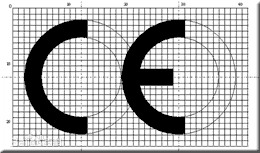
The CE mark is planned as a regulatory measure with enforcement power; it indicates compliance with all relevant EU Commission directives. Here are some common questions and answers about CE certification application:
1. What are the purposes of applying for CE certification?
the benefits of applying for and affixing the CE mark include: the CE mark serves as a free pass to enter the European market, products with the CE mark greatly increase consumer trust because it signifies a commitment from the manufacturer to consumers. Additionally, there are other benefits such as:
1. Passing the CE certification and affixing the CE mark allows your product to be sold freely in 29 near-EU countries without adhering to each country's specific requirements.
2. Applying for the CE certification maximizes trust from both consumers and market supervision authorities.
3. Reducing competition claims lowers the risk of selling products in the European market.
Two, how long is the validity period of a CE certificate?
The validity of the CE mark depends on the product's risk level, relevant standards and directives, as well as changes in the manufacturer's production process and raw materials. If there are no significant changes, the certificate remains valid. For high-risk products, an annual FPC (Frequent Product Check) is required to maintain its validity.
Three, what is the CE certification process?
1. The applicant submits a verbal or written initial application to the relevant laboratory (referred to as the laboratory).
2. The applicant fills out the CE marking application form and sends it along with the product usage manual and technical documents to the laboratory (if required, the company also needs to provide a sample of the product).
3. The laboratory determines the inspection standards and testing items and quotes.
4.The applicant confirms the quotation and submits samples and relevant technical documents to the laboratory.
5.The applicant provides technical documents.
6.The laboratory issues a charge notification to the applicant, who then pays the certification fees according to the notification requirements.
7.The laboratory conducts product testing and reviews the technical documents.
8.Technical document review includes: a) whether the documentation is complete; b) whether it is written in one of the official European Community languages (English, German, or French).
9.If the technical documents are incomplete or not written in the specified language, the laboratory will notify the applicant to make improvements.
10.If the tests fail, the laboratory will promptly inform the applicant and allow them to improve their product. This process continues until the test is successful. The applicant must revise the original application's technical data to reflect the updated situation.
11.Fees for any revisions mentioned in clauses 9 and 10 of this page will be notified by the laboratory to the applicant.
12.The applicant pays the revision fees according to the supplementary charge notification from the laboratory.
13.The laboratory provides the product testing report or technical file (TCF), as well as CE conformity certificate (COC) and CE mark to the applicant.
14. The applicant signs the CE declaration of conformity and affixes the CE marking to the product.
4. What materials are required for CE certification?
1. Product user manual.
2. Safety design documents (including key structural diagrams, which reflect creepage distances, clearances, insulation layers, and thickness).
3. Product technical conditions or enterprise standards.
4. Product electrical schematic diagram.
5. Product wiring diagram.
6. List of critical components or raw materials (please select products with European certification marks).
7. Copy of the CE certificate for the whole machine or component.
8. Other required documents.